
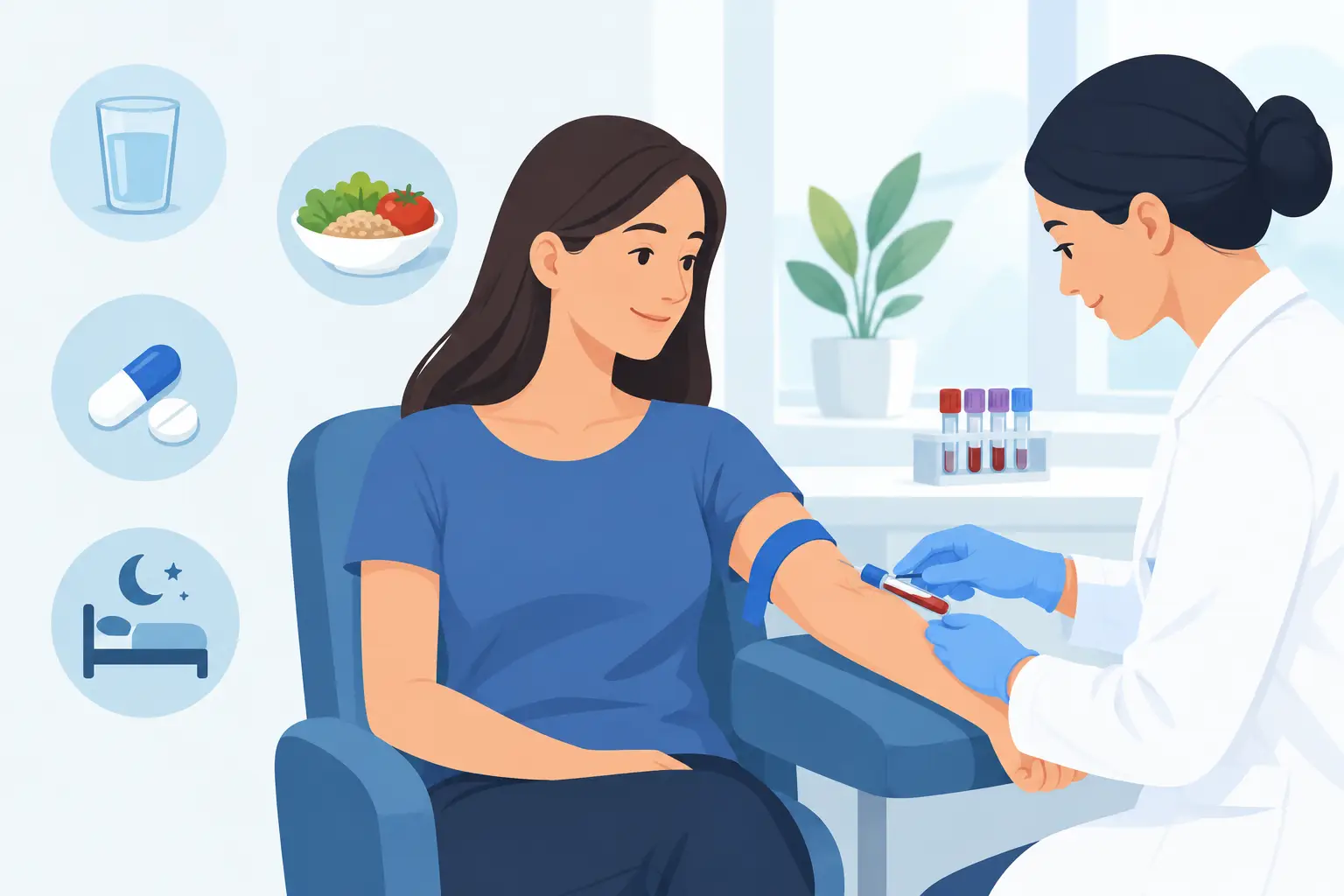
A blood test appointment is often quick, but the preparation beforehand can make a meaningful difference to how useful the results are. If you are asking how to prepare for blood tests, the best starting point is simple: follow the instructions given for your particular test, rather than relying on a one-size-fits-all rule.
Some blood tests need fasting, while others do not. Certain medicines, supplements, strenuous exercise and even dehydration can affect individual measurements. Knowing what applies to you helps your clinician interpret your results accurately and reduces the chance that you will need a repeat sample.
Start with the instructions for your test
Your preparation depends on what is being measured. A routine full blood count, for example, may not require fasting. Tests for glucose, cholesterol and some liver or metabolic markers may have more specific requirements. If your blood test forms part of a broader health assessment, the clinician arranging it should explain whether there is anything you need to do differently.
Do not assume that a previous test had the same rules. Laboratories can use different methods, and your clinician may be looking at a different combination of markers this time. If you have not received clear guidance, contact the clinic before your appointment. A short conversation can prevent an inconvenient repeat visit and give you greater confidence on the day.
Do you need to fast before a blood test?
Fasting means avoiding food and drinks containing calories for a set period before your sample is taken. Water is usually permitted and is often encouraged, but you should always confirm the instructions you have been given.
When fasting is required, it is commonly for around 8 to 12 hours. An early-morning appointment can make this more comfortable, as much of the fasting period takes place overnight. You may normally be asked to avoid breakfast, milky drinks, fruit juice, alcohol and chewing gum until after the test. Black tea or coffee may also be restricted, as caffeine can affect certain results and some people unintentionally add milk or sugar.
Fasting is not automatically better. If your test does not require it, there is no benefit in going without food, and doing so may leave you light-headed or uncomfortable. People who are pregnant, have diabetes, take medication that affects blood sugar, or have a history of fainting should seek tailored advice before fasting. Never stop eating or alter diabetes medication without discussing it with the clinician responsible for your care.
Stay well hydrated, but keep it simple
Drinking water before a blood test can make the experience easier. Good hydration can support blood flow and make veins easier to access, particularly if you tend to have difficult blood draws. It also helps you feel more comfortable if you are fasting.
Aim to drink water as you normally would in the hours before your appointment. There is no need to drink excessive amounts immediately beforehand. Overhydration is uncomfortable and can, in unusual circumstances, affect the concentration of some substances in the blood.
If you have been asked to fast, plain water is generally the safest choice unless your instructions say otherwise. Save your coffee, smoothie or breakfast for after the appointment.
Medicines and supplements: do not make changes on your own
Bring an up-to-date list of all prescription medicines, over-the-counter treatments, vitamins and supplements you take. This includes products that may seem unrelated to your health, such as protein powders, herbal remedies, biotin supplements and high-dose vitamins.
Some treatments can influence test results, while other medicines need to be taken at a particular time in relation to the blood draw. For example, thyroid medication, iron supplements and certain hormone treatments may come with specific instructions. Your clinician may ask you to take your usual medication as normal, delay a dose until after the test, or attend at a particular time of day.
Do not stop prescribed medication simply because you have a blood test booked. The right approach depends on the test, your condition and the medicine involved. If you are unsure, ask in advance rather than guessing on the morning.
Avoid factors that can temporarily alter results
Blood results provide a snapshot of what is happening in your body at that moment. Everyday factors can shift some readings enough to complicate interpretation, particularly where a result is close to a clinical threshold.
It is sensible to avoid strenuous exercise for 24 hours before a planned blood test unless your clinician advises otherwise. A demanding gym session, long run or heavy training session can temporarily affect markers linked to muscle activity, inflammation, hydration and blood sugar.
Alcohol is also worth avoiding for at least 24 hours before testing, especially if liver function, triglycerides or glucose are being measured. A late night, poor sleep or significant stress may influence certain results too. You do not need to create a perfect day before your appointment, but try to keep your routine calm and typical.
Smoking and vaping can affect some measurements. If you can, avoid them shortly before your appointment. Be honest with your clinician about your usual habits, as this context can matter when reviewing results.
What to do on the morning of your appointment
Choose comfortable clothing with sleeves that can be rolled up easily. Arrive a few minutes early so you are not rushing, particularly if you feel anxious about needles. Tell the person taking your blood if you have fainted before, are nervous, have difficult veins or prefer to lie down. These are common concerns, and a calm, prepared approach can make the experience much easier.
Bring your identification if requested, any test forms you have been given, and a list of your medicines and supplements. If you are fasting, it can be helpful to bring a small snack for afterwards, especially if you are travelling on to work, school runs or other commitments.
For a straightforward appointment, these are the practical points to check:
- Confirm whether you need to fast and for how long.
- Drink water as normal unless you have been told otherwise.
- Ask about medicines and supplements before changing your routine.
- Avoid intense exercise and alcohol the day before where possible.
- Tell the clinician about needle anxiety, previous fainting or difficult blood draws.
Preparing children and nervous patients
For children, preparation is as much about reassurance as it is about food or drink instructions. Explain simply that the clinician will take a small sample of blood to help understand how their body is working. Avoid promises that it will not hurt at all, but let them know it is usually over quickly and that they can look away, hold a hand or bring a familiar comfort item.
Adults who feel anxious should not feel embarrassed to say so. Needle anxiety is common, including among people who are otherwise comfortable with medical appointments. Slow breathing, looking away and remaining seated or reclined can help. If fasting makes you more likely to feel faint, ask whether an early appointment or alternative preparation plan is appropriate.
What happens after your blood test?
After the sample is taken, apply gentle pressure to the site for the time advised. A small bruise or mild tenderness can happen and usually settles without treatment. Keep the plaster on for a short while, and avoid heavy lifting with that arm immediately afterwards if the area feels sore.
Results should always be considered in context. A result outside a reference range does not automatically mean something is wrong, just as a result within range does not always rule out a concern. Your symptoms, medical history, medicines and the reason for testing all inform the next conversation.
At One Clinic Leigh, blood testing can be part of a wider, unhurried discussion about your health rather than an isolated number on a page. If anything needs follow-up, having clear clinical guidance and continuity of care can turn uncertainty into a practical next step.
The most useful preparation is not about being perfect. Follow the instructions for your test, keep your routine sensible and ask when something is unclear. That gives your blood results the best chance of reflecting your health accurately – and gives you a stronger starting point for the care that follows.
Related articles

Private GP versus walk-in: Which Care Fits?
Private GP versus walk-in care: compare speed, continuity, costs and clinical scope, so you can choose the right support when you need it, close to home.

Best Options for Chipped Teeth Explained
Explore the best options for chipped teeth, from smoothing to bonding, veneers and crowns, with guidance on choosing treatment that best suits your smile.

How to Choose a Private GP With Confidence
Learn how to choose a private GP who offers timely appointments, continuity and clinical standards, so your care feels personal, trusted and convenient.


