
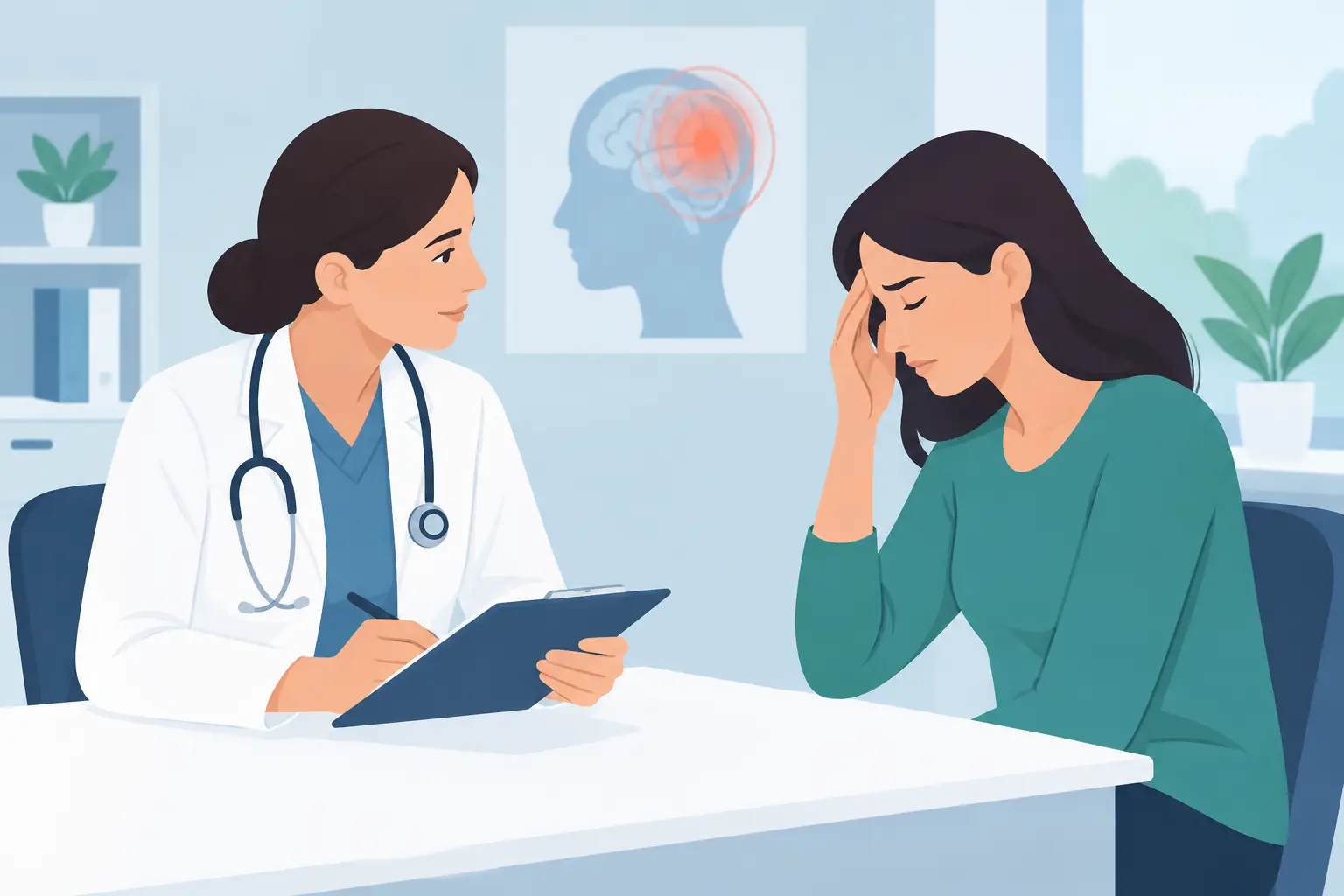
A migraine can turn a working day, family plan or long-awaited weekend into something to simply get through. The pain is only part of it: nausea, light sensitivity, visual disturbance and exhaustion can make everyday life feel impossible. So, can a GP treat migraines? In many cases, yes. A GP can assess your symptoms, rule out concerning causes, create a treatment plan and help you reduce the impact of attacks over time.
Can a GP treat migraines?
A GP is often the right first clinician to see for recurrent headaches or suspected migraine. Migraine is a common neurological condition, but its symptoms and triggers vary considerably from person to person. Some people experience severe throbbing pain on one side of the head; others have pain on both sides, dizziness, nausea or sensitivity to sound and light. Some experience aura, which may include flashing lights, blind spots, tingling or difficulty finding words before the headache begins.
A careful GP consultation looks beyond the headache itself. Your doctor will ask when attacks began, how long they last, how often they happen, what symptoms come with them and whether there are clear triggers. Sleep, stress, hormonal changes, missed meals, alcohol, caffeine, dehydration and certain medicines can all play a part, although migraine is rarely as simple as identifying one cause and avoiding it.
The aim is not to dismiss a migraine as “just a headache”. It is to understand its pattern, make sure there are no warning signs of another condition, and agree a practical plan that fits your health history and daily life.
What happens at a GP migraine appointment?
A migraine appointment should give you time to describe what an attack is really like, not simply how painful it is. Your GP may ask about your family history, existing medical conditions, contraception or hormone treatment, pregnancy plans, current medicines and how many days each month you use pain relief.
They may check your blood pressure and perform a focused neurological examination, particularly if your symptoms are new, changing or unusual. Tests or scans are not routinely required for typical migraine, but your GP may arrange blood tests, imaging or onward referral if your symptoms suggest that a different cause needs to be investigated.
Keeping a simple headache diary before your appointment can be very useful. Record the date, duration, symptoms, possible triggers, treatments taken and whether they helped. Over a few weeks, this can reveal whether you are having occasional attacks, frequent migraine days or a pattern linked to your cycle, sleep or workload.
Treating an attack early
For many people, treatment works best when taken at the first sign of an attack. Depending on your symptoms and medical history, a GP may recommend or prescribe pain relief, anti-sickness medication, or a migraine-specific medicine such as a triptan. Triptans are not suitable for everyone, so it is important not to borrow medication or self-treat without advice.
If nausea means tablets are difficult to keep down, other formulations may be considered. Your GP can also discuss when to rest, hydrate and reduce sensory stimulation. These measures will not cure migraine, but they can make an attack more manageable alongside the right medication.
Preventing frequent migraines
If migraines are happening regularly, are prolonged, or continue to disrupt work and home life despite acute treatment, prevention becomes part of the conversation. Preventative medicines are taken regularly to reduce the number or severity of attacks, rather than to stop a migraine once it has started.
The most appropriate option depends on your wider health picture. Some preventative treatments can affect blood pressure, mood, weight, sleep or pregnancy planning, which is why a personalised discussion matters. Your GP will normally review the effect after an agreed period and adjust the plan if needed.
Lifestyle support has a place too, but it should be realistic. Consistent meals, hydration, sleep and gentle regular exercise may lower the chance of attacks for some people. Trying to eliminate every possible trigger can be stressful and restrictive, especially when triggers change. A better approach is to identify the factors that reliably affect you and build routines that are sustainable.
Avoiding medication-overuse headaches
One reason migraine can become harder to manage is frequent use of acute pain relief. Taking medication too often can itself contribute to more headaches, creating a frustrating cycle of pain and treatment.
As a general guide, using triptans, combination painkillers or opioid medicines on 10 or more days a month may raise this risk. For simple painkillers or anti-inflammatory medicines, the threshold is usually 15 or more days a month. These figures are not a reason to stop prescribed medication suddenly, but they are a strong reason to speak to a GP about a safer plan.
A headache diary can make this pattern visible. It also helps your doctor distinguish between episodic migraine and a more frequent or chronic problem that may need preventative treatment or specialist input.
When might a GP refer you to a specialist?
Many migraines can be managed well in general practice, particularly when there is time for continuity and follow-up. However, a GP may recommend referral to a neurologist or headache specialist if the diagnosis is uncertain, attacks are severe and difficult to control, symptoms are becoming more frequent, or more specialised treatments may be appropriate.
Referral may also be useful for complex migraine patterns, including suspected vestibular migraine, prolonged aura or headaches that have not improved with several appropriate treatment options. This is not a sign that your symptoms have been ignored or that general practice has failed. It is about bringing in the right level of expertise when the situation calls for it.
For patients who value prompt, face-to-face assessment, One Clinic Leigh offers private GP appointments with the time to discuss symptoms properly, consider treatment options and arrange appropriate next steps. Continuity with the same GP can be especially helpful when migraine management needs review over several months.
When a headache needs urgent medical help
Most headaches are not caused by a serious illness, but a new or unusual severe headache should never be brushed aside. Seek urgent medical attention if you have a sudden, explosive headache that reaches maximum intensity within seconds or minutes, sometimes described as a thunderclap headache.
You should also seek emergency help for a headache with weakness or numbness on one side, facial drooping, trouble speaking, confusion, fainting, seizure, new loss of vision, a stiff neck with fever, or after a significant head injury. Call 999 if stroke symptoms are present.
Prompt assessment is also sensible for a new headache during pregnancy or shortly after giving birth, a new headache after the age of 50, or a significant change in an established migraine pattern. These symptoms do not always mean something serious is wrong, but they need clinical assessment rather than a routine migraine plan.
Getting more from your migraine review
You do not need to arrive with a perfect diary or a medical explanation for your symptoms. Still, being clear about the practical impact can help your GP provide better care. Mention days off work, cancelled plans, sleep disruption, emergency visits, missed school runs or the anxiety of waiting for the next attack. These details help show the true burden of migraine.
Be open about all medicines and supplements you take, including over-the-counter pain relief. If migraines seem linked to periods, hormonal contraception or menopause symptoms, say so. Hormonal changes can be clinically relevant, and treatment decisions may need to take them into account.
A good migraine plan is usually reviewed, not handed over once and forgotten. With the right assessment, effective acute treatment and a prevention strategy where needed, many people find they regain more predictable, comfortable days. Booking a GP appointment is a practical first step towards understanding what your headaches are telling you and getting care that fits your life.
Related articles

Private GP versus walk-in: Which Care Fits?
Private GP versus walk-in care: compare speed, continuity, costs and clinical scope, so you can choose the right support when you need it, close to home.

Best Options for Chipped Teeth Explained
Explore the best options for chipped teeth, from smoothing to bonding, veneers and crowns, with guidance on choosing treatment that best suits your smile.

How to Choose a Private GP With Confidence
Learn how to choose a private GP who offers timely appointments, continuity and clinical standards, so your care feels personal, trusted and convenient.


