
A wedding, an important presentation or simply seeing yourself in photographs can make a small dental concern feel more noticeable. When comparing clear aligners versus veneers, the central question is not which treatment is better overall. It is which approach protects your natural teeth while creating the change you would genuinely like to see.
Both treatments can produce a beautifully balanced smile, but they work in entirely different ways. Clear aligners move your own teeth gradually into a better position. Veneers alter the visible front surface of selected teeth to improve their shape, colour or appearance. A careful consultation helps establish whether your priority is alignment, colour, proportion, tooth health or a combination of these.
Clear aligners versus veneers: the essential difference
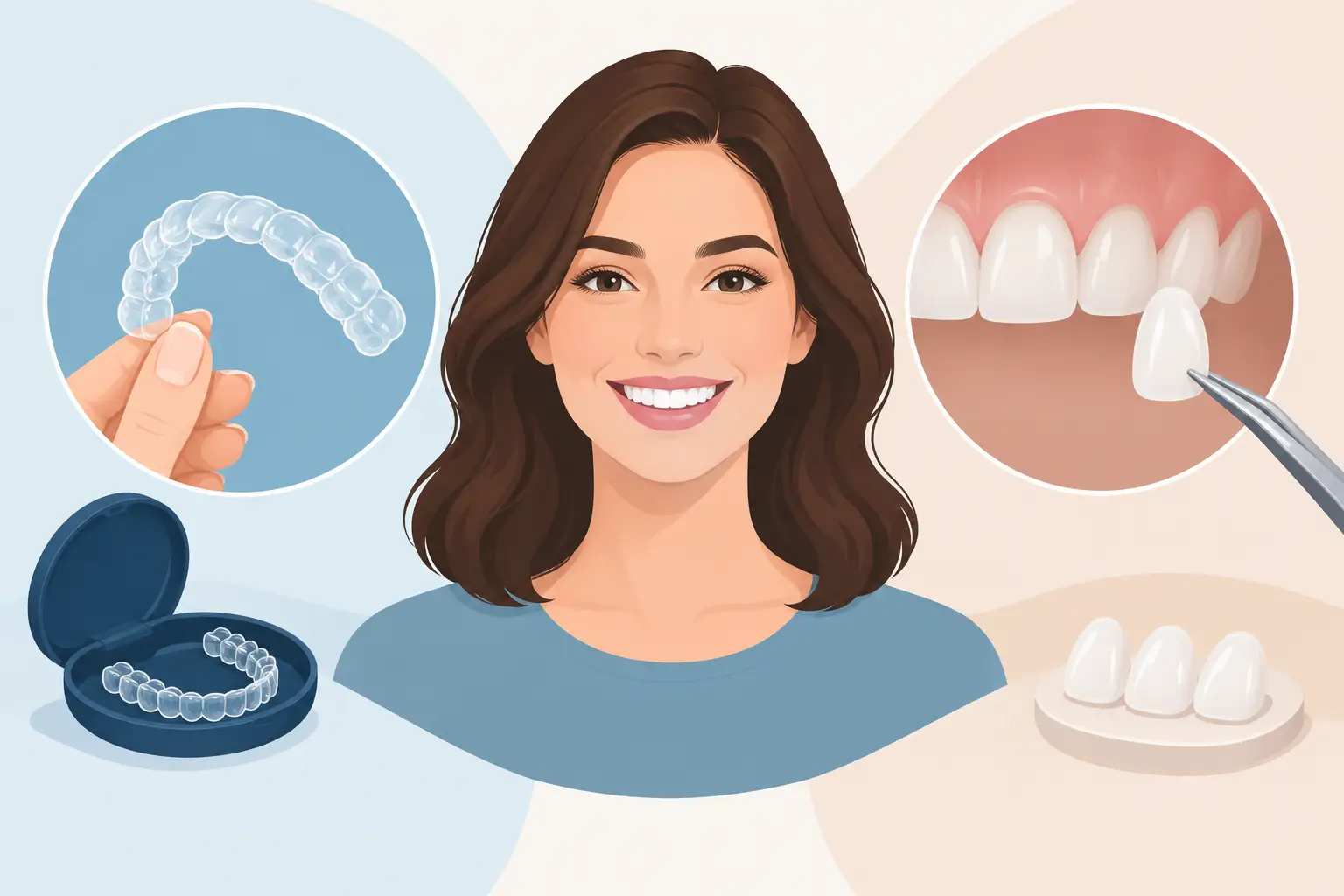
Clear aligners are removable, custom-made trays that apply gentle, controlled pressure to guide teeth into position. They may be suitable for concerns such as crowding, spacing, mild bite issues or teeth that have shifted since previous orthodontic treatment. The process works with your natural teeth, improving how they sit rather than covering them.
Veneers are thin, bespoke shells, usually made from porcelain or composite resin, bonded to the front of a tooth. They can improve the appearance of teeth that are discoloured, worn, chipped, unevenly shaped or difficult to whiten. They do not move teeth or correct the underlying bite.
That distinction matters. If the main issue is that teeth are crooked or crowded, aligners are often the more conservative route. If teeth are already well positioned but their colour, shape or surface is the concern, veneers may offer a more direct solution.
When clear aligners may be the right choice
Clear aligners can be an appealing option for adults who want to straighten their smile discreetly. The trays are clear and removable, so they can be taken out for meals, brushing and special occasions. For busy patients, this flexibility can fit comfortably around work, family life and social commitments.
The key commitment is wear time. Aligners normally need to be worn for around 20 to 22 hours each day to deliver predictable progress. They should only be removed for eating, drinking anything other than water, and cleaning your teeth. Skipping wear time or losing trays can extend treatment and affect the result.
Treatment times vary. Minor movement may take a matter of months, while more complex alignment can take longer. Your dentist will assess the position of your teeth, bite, gum health and goals before advising whether aligners are appropriate. In some cases, traditional orthodontics may still be the better clinical recommendation.
Clear aligners are especially valuable where preserving healthy enamel is a priority. Straightening teeth can also make daily cleaning easier when crowding has created hard-to-reach areas. However, aligners will not change the intrinsic colour of a tooth, repair chips or make naturally small teeth appear wider. Whitening or small amounts of bonding may be considered after alignment where appropriate.
What aligners cannot promise
It is tempting to view aligners as a cosmetic quick fix, but orthodontic treatment has limits. Significant bite discrepancies, severely rotated teeth, active gum disease or untreated decay require a more detailed plan before any cosmetic work begins. Results also need to be maintained with retainers. Teeth have a natural tendency to move over time, so wearing retainers as instructed is an essential part of protecting your investment.
When veneers may be the right choice
Veneers can create a striking refinement in fewer appointments than orthodontic treatment, particularly when the concern is cosmetic rather than positional. Porcelain veneers are carefully designed to reflect light in a tooth-like way and can offer excellent resistance to staining. Composite veneers can often be completed more quickly and may require less tooth preparation, although they can be more prone to staining and chipping over time.
A veneer may be considered for a tooth with persistent staining that has not responded as hoped to whitening, a visible chip, uneven edges, small gaps, or irregular shape. It can also bring harmony to a smile where teeth have worn down or have differing proportions.
The planning stage should never be rushed. Your dentist should consider the health of the teeth and gums, your bite, facial proportions and how much natural tooth structure can be retained. The aim is not a uniform, overly bright result. It is a smile that looks healthy, balanced and appropriate to you.
Porcelain veneers are a long-term restoration, not a temporary cosmetic accessory. In many cases, a small amount of enamel is prepared to create space and a natural contour. Because enamel does not grow back, those teeth will usually require future veneer replacement or restoration. This is why veneers are best chosen with a full understanding of their lifelong maintenance needs.
Looking after veneers
Veneers still need excellent home care. Brushing twice daily with fluoride toothpaste, cleaning between teeth and attending regular dental examinations and hygiene appointments will help protect the gums and tooth structure around them. Avoiding habits such as nail biting, chewing ice or opening packaging with your teeth is sensible too.
A night guard may be recommended if you clench or grind your teeth. Veneers can be durable, but they are not indestructible, and protecting them is part of maintaining a refined result.
Cost, timing and long-term value
Clear aligners and veneers have different cost structures because they solve different problems. Aligner fees usually reflect the complexity of tooth movement, the number of trays, monitoring appointments and retainers. Veneers are typically priced per tooth, with costs influenced by material, laboratory craftsmanship and the amount of preparation needed.
It is worth looking beyond the initial fee. Aligners require consistent wear and ongoing retention. Veneers may need replacement at some point in the future, and adjacent natural teeth can still change colour. Neither treatment is maintenance-free.
Timing can also shape the decision. Veneers may provide a visible change relatively quickly once planning is complete. Aligners take longer, but may be the more conservative choice when alignment is the real issue. If you have a significant event approaching, seek advice early rather than choosing a treatment based only on a deadline.
Can you have aligners and veneers together?
Yes, in carefully selected cases. A dentist may recommend straightening teeth first, then using a small number of veneers or composite bonding to refine shape, proportion or edges. By aligning teeth beforehand, it may be possible to reduce the amount of tooth preparation required for a cosmetic restoration.
This staged approach is not necessary for everyone, and it should not be used to add treatment without a clear benefit. The best plan is the one that addresses your concerns with the least unnecessary intervention while supporting your dental health.
How to make a confident decision
Bring clear priorities to your consultation. Are you most concerned by crooked teeth, gaps, dark colour, chipped edges or an uneven smile? Would you prefer a gradual change using your natural teeth, or are you looking for a more immediate improvement to selected teeth? How comfortable are you with the daily discipline of aligners or the long-term commitment of veneers?
Your dentist should examine more than what is visible in a mirror. Gum health, enamel quality, bite forces, existing fillings and habits such as grinding all affect what is safe and likely to last. Digital scans, photographs and smile planning can help make the proposed result easier to understand before treatment begins.
At One Clinic Leigh, cosmetic dentistry conversations begin with this wider clinical picture, combining careful assessment with a calm, personalised experience. There is no benefit in choosing the fastest-looking option if it does not support the health and longevity of your smile.
A considered consultation can turn a cosmetic decision into a confident one. Whether the answer is aligners, veneers, whitening, bonding or no treatment at all, the right recommendation should feel clear, comfortable and genuinely right for you.
Related articles

Private GP versus walk-in: Which Care Fits?
Private GP versus walk-in care: compare speed, continuity, costs and clinical scope, so you can choose the right support when you need it, close to home.
Best Options for Chipped Teeth Explained
Explore the best options for chipped teeth, from smoothing to bonding, veneers and crowns, with guidance on choosing treatment that best suits your smile.

How to Choose a Private GP With Confidence
Learn how to choose a private GP who offers timely appointments, continuity and clinical standards, so your care feels personal, trusted and convenient.


